Fashion styles are often presented as a list of things to buy: a blazer for work, a slip dress for evenings, wide-leg trousers for the season. That approach misses the useful question. Why does one garment make you feel composed while another, from a similar rack, makes you tug at the hem all day? After altering more than 12,000 garments, I can tell you the answer usually lives in the cut, fabric, and construction rather than the label.
I do not believe you need a complete closet overhaul every few months. You need to understand what you are looking at. Turn a garment inside out, study the seam, pinch the fabric at the waist, and look at where the line travels across your body. The inside tells the truth.
Start with the shape, not the trend
The most useful fashion styles begin with proportion. A garment can be attractive on a hanger and still be wrong for your measurements. A cropped jacket, for example, ends at a specific point. If that point lands directly across the fullest part of your hip, it can make the jacket feel awkward even when the shoulder fits beautifully. Moving the hem two inches, or choosing a jacket that ends above the hip, often changes the entire effect.
Look at shoulder width, bust placement, waist position, and hem length before worrying about color. A shoulder seam should sit close to the actual shoulder bone, not drift down the upper arm. A blouse needs enough room across the bust that the buttons lie flat. Trousers should hang from the waistband without diagonal strain lines pulling toward the pockets.
These details are not rules about your body. They are clues about the garment. The goal is not to disguise yourself. It is to find a shape that cooperates with you instead of demanding constant adjustment.
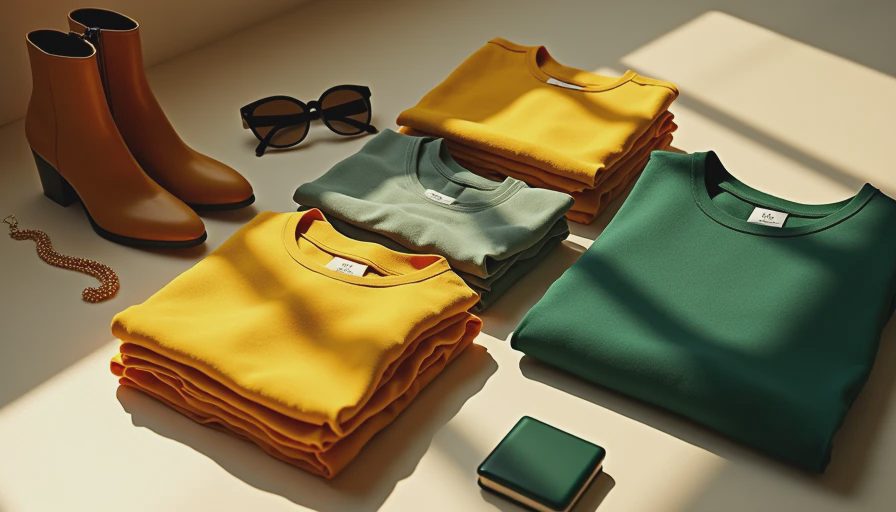
What different fashion styles reveal inside
Minimal style depends heavily on construction because there is nowhere for poor sewing to hide. On a simple cotton shirt, check whether the side seams hang straight and whether the collar is supported by a firm but flexible interfacing. If the collar collapses after one wash, the shirt may still be wearable, but it was not built for the crisp appearance shown online.
Romantic fashion styles often use gathers, ruffles, lace, or puffed sleeves. These details can be charming, but inspect their attachment. A ruffle sewn directly onto a raw edge may curl and fray quickly. A cleanly finished edge, narrow hem, or properly enclosed seam will hold its shape longer. The more decoration a piece has, the more important it is to examine the foundation beneath it.
Tailored styles should show careful control at the front and back. Look for darts that point toward, but do not end directly on, the fullest part of the bust. A dart that ends too close can create a sharp bump. On a lined jacket, see whether the lining has a small amount of ease at the center back. That extra room allows you to move without pulling the outer fabric out of shape.
Fabric decides how the outfit behaves
Many fashion styles fail because shoppers judge fiber content without considering weight and weave. A shirt labeled 100 percent cotton can be airy lawn, sturdy poplin, or thin jersey. Each behaves differently. Poplin holds a collar and resists wrinkles better than a loose rayon-like weave, while jersey follows every curve and needs enough recovery to avoid bagging at the elbows.
Hold fabric near a window if you can. Check whether the weave looks even and whether the surface has weak, shiny patches. Stretch knit fabric across your hand, then release it. If it returns quickly, it is likely to keep its shape better than a knit that stays stretched. Rub a small hidden area between your fingers. Excessive fuzzing suggests the surface may pill with wear.
A blend is not automatically inferior. A cotton and elastane trouser can be more comfortable and durable than rigid cotton. Polyester can add wrinkle resistance to a work dress, and a small amount of nylon can improve strength in a lightweight sweater. The question is whether the blend supports the garment's purpose.
Fit problems you can diagnose at home
Put on the garment you are considering and stand naturally, without pulling it into position. Watch what the fabric does. Horizontal lines across the bust usually indicate insufficient room there. Vertical drag lines near the hip can signal that the garment is too narrow or that the side seam is not sitting where it should. Excess fabric pooling behind the knees often means the trouser shape does not match your leg or the rise is wrong.
A mirror helps, but movement tells you more. Sit in the trousers, reach forward in the blouse, and raise both arms in the jacket. If the whole garment lifts when you move, the armhole may be cut too low or too tight. If the neckline slides backward, the front and back balance may be off.
Some issues are easy alterations. A tailor can shorten a sleeve, raise a hem, or take in a side seam for roughly $15 to $60 depending on the garment and region. Others are expensive or impossible, such as adding significant room across a narrow bust or rebuilding a badly placed armhole. Buy the garment with the hardest measurement already working.

Building a wardrobe with fewer, better decisions
The strongest fashion styles in a practical wardrobe are the ones that can repeat without looking identical. Choose a jacket that works with at least three bottoms, a skirt that can handle flats and boots, and a blouse that does not require a special undergarment every time you wear it. Versatility is not dull when the fit is excellent.
Before buying, compare the new piece with what you already own. Is the color compatible with your shoes? Does its fabric care requirement fit your actual week? A beautiful silk blouse that needs frequent dry cleaning may become expensive clutter if you prefer machine-washable clothing. Read the care label before falling in love with the photograph.
Price is also a construction question. A $45 dress with clean seams, sensible seam allowance, and a stable fabric can serve you better than a $180 dress with loose threads and a twisting lining. Check the hem, zipper, button attachment, and inside finishing. Five quiet minutes in a fitting room can save months of irritation.
A seamstress's final test
When comparing fashion styles, ask what the garment is asking you to do. Must you keep pulling the neckline forward? Will you need to steam it every morning? Does the waistband dig in when you sit? Clothing should require some care, but it should not require negotiation every hour.
I once worked on a dress that looked expensive from across the room. Inside, the seam allowances were uneven, the lining was shorter than the outer skirt, and the zipper had been stitched through a fold. The owner thought her body was the problem because the dress twisted whenever she walked. It was not her body. It was a poorly balanced garment. We corrected what we could, but the lesson stayed with me.
Choose fashion styles by studying how they are built and how they behave on you. Notice the shoulder seam, the dart, the hem, and the way the fabric recovers after movement. Then spend your money on the pieces that make those tests look easy. A well-made garment does not shout for attention. It simply lets you get on with your day.





No notes yet — write the first one.