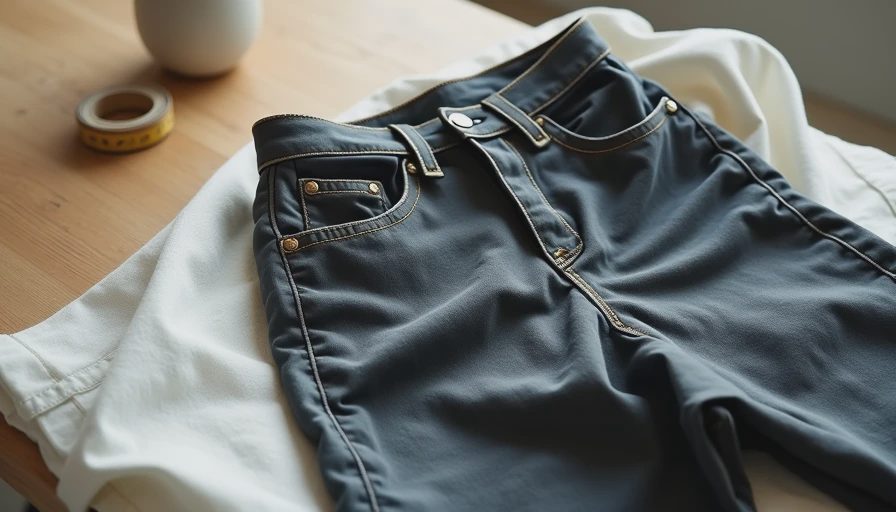
The Most Common Fitting Room Complaint I Hear
Let’s get one thing straight right away: If your pants are pulling or wedging in the crotch area, it’s probably not because you gained weight, sat too much, or “just have the wrong shape.” It’s almost always the crotch curve.
Hi, I’m Paige Sullivan. After 12 years fixing bridal gowns and now helping professional women with everyday wardrobes, I can tell you this issue tops the list of frustrations. Women stand in my studio, tug at their pants, and say the same defeated line: “I must have put on a few pounds.”
Nope. Let’s look inside.
What the Heck Is a Crotch Curve Anyway?
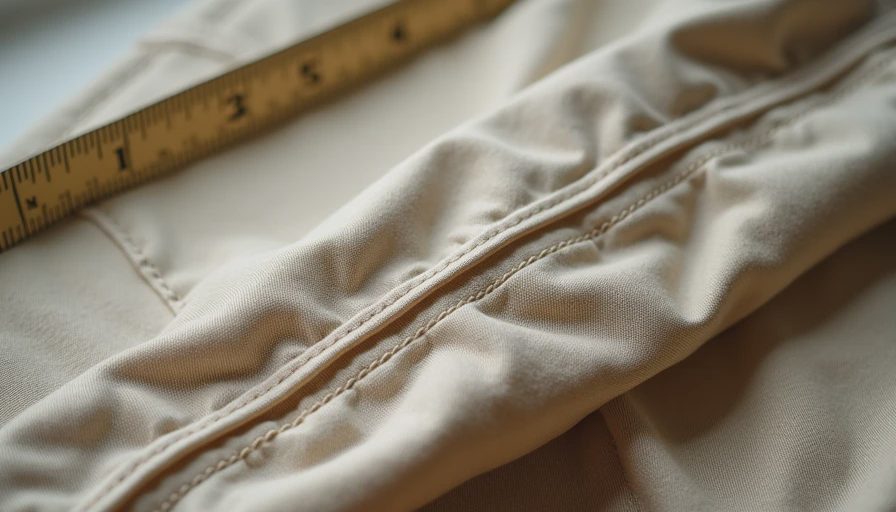
Imagine the path a pair of pants takes from front waist, down through the legs, and back up to the rear waist. That U-shaped section between your legs is defined by the crotch curve — the seam line that connects the front and back pattern pieces.
A good crotch curve is shaped like a gentle, tilted smile that matches the actual contours of a human body. It accounts for the forward tilt of the pelvis, the roundness in the back, and the way we actually move when we sit, walk, or climb stairs.
Mass-produced pants? They often use a generic, shallow curve that works okay for a narrow range of bodies and terribly for everyone else. The result? Fabric straining in all the wrong places, creating that tell-tale pull or the dreaded “camel toe” effect that no one wants.
Why This Happens So Often
Ready for the part that will make you feel better? It’s not you. It’s the pattern.
When manufacturers cut costs, they simplify patterns. They use one or two basic crotch shapes across multiple sizes instead of properly grading the curve for different hip depths, thigh thicknesses, and posture variations. Add in cheap fabric with poor recovery and you’ve got a recipe for constant adjustment.
I’ve altered thousands of these. The pants look fine when you’re standing perfectly still in the dressing room mirror. The moment you sit down at your desk? Betrayal.
How to Diagnose the Problem Yourself
Next time you try on pants, do this quick test:
Stand naturally. Look in the mirror from the side. If the fabric is pulling forward or creating diagonal wrinkles from the crotch toward the hip or knee, the curve is wrong.
Sit down in the fitting room (yes, really). If everything suddenly feels tighter or rides up, the back crotch curve is likely too short.
Walk around. If you feel constant wedging, the depth or shape doesn’t match your body.
These are construction issues, not personal failures.
The Fix: What a Good Tailor Can Do
The good news? This is one of the most fixable problems in ready-to-wear clothing.
A skilled tailor can add a gusset, reshape the crotch curve, or insert extra fabric in the right places. For most pairs of pants, we’re talking a $25–$45 alteration that makes them fit like they were made for you.
I once took a client’s favorite (but uncomfortable) work trousers and completely redrew the crotch curve. She came back a week later practically dancing. “I forgot what it felt like to forget I was wearing pants,” she told me.
That’s the goal.
Real Stories From the Alterations Table
One memorable case involved a sharp corporate lawyer who spent hundreds on “high-quality” trousers that still gave her trouble. When I turned them inside out, the crotch seam was barely ¼ inch wide with no reinforcement and a curve that belonged on a completely different body type.
We rebuilt it. Two weeks later she sent me a photo of her standing confidently in a presentation. Small change, big difference in how she carried herself.
Another time, a client brought in stretchy yoga-style pants for office wear (we’ve all been there). The crotch curve was so shallow she felt self-conscious all day. A simple wedge insert in a matching fabric solved it completely.
The 12-Inch Rule (Bonus Tip)
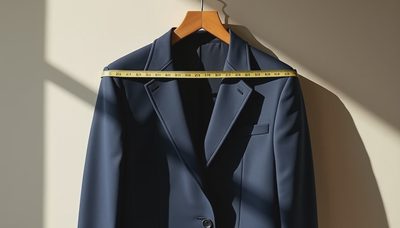
While we’re talking fit, here’s a quick hack I teach everyone: Measure 12 inches down from the shoulder seam on a jacket or top. That point should land roughly where your bust is fullest for good proportion. But for pants? Stand sideways and check where the crotch depth hits relative to your actual body. If it’s too high or too low, you’ll fight the garment forever.
Why Understanding This Changes Everything
Once you know the crotch curve is the culprit, you stop blaming your body. You start shopping smarter. You look for brands that offer different rises (short, regular, long) or have more generous patterns. You learn to recognize good construction even before you try anything on.
You also become more patient with tailoring. A $60 pair of pants plus a $35 alteration often beats a $200 pair that still doesn’t fit right.
What I Want You to Remember
Your body is not the problem. Bad patterns and cost-cutting manufacturing are.
The next time pants disappoint you, flip them inside out. Look at that crotch seam. Tug it. See how it’s shaped. That’s where the truth lives.
The inside tells the truth — and sometimes the truth is that the manufacturer just didn’t care enough about real bodies.
I’m here to help you fight back with knowledge, better shopping habits, and the occasional trip to a good tailor. You deserve clothes that work with you, not against you.
No notes yet — write the first one.