As someone who's spent twelve years taking apart wedding dresses, I can tell you: the inside tells the truth. Turn a garment inside out, and the types of stitches used to build it will tell you more about its future than any price tag. I've seen $5,000 gowns with sloppy seams and $80 dresses that could outlive me. It all comes down to the stitching.
The Straight Stitch: The Workhorse You're Probably Wearing Right Now
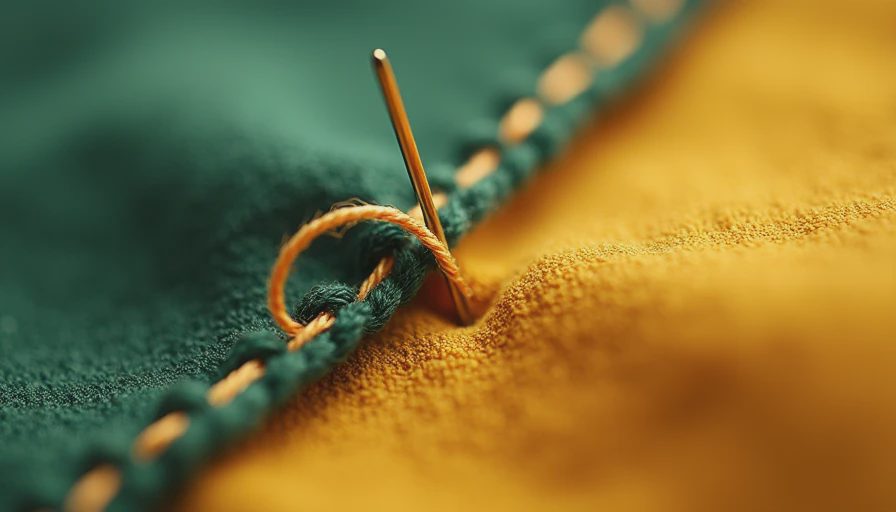
A straight stitch is a line of lockstitch formed by a needle and bobbin thread. It holds the main seams of your blouse, jeans, and coat. Done well, the stitches are even, the tension is balanced, and the fabric lies flat with no puckering. Hold the seam to the light: if you see loops or pulling, the tension is off. A good straight seam is invisible from the outside but firm enough that you can't pull the pieces apart. On quality jeans, the structural stitching underneath is a straight lockstitch. That's the foundation of every well-made garment.
Zigzag and Overlock: Why Your Seams Don't Fall Apart in the Wash
A zigzag stitch runs side to side while moving forward, giving the seam stretch and keeping raw edges from unraveling. You'll find it on knit fabrics, curved seams, and stress points. The overlock stitch, or serger stitch, is the looped thread on the inside of factory-made garments. It trims the seam allowance as it sews. This is one of the types of stitches that separates cheap construction from durable. A proper overlock seam uses three or four threads and feels springy when you pull it. Loose loops or skipped stitches mean the garment may not survive many washes.
Blind Hem, Running Stitch, and Whipstitch: The Finishing Cast
Not every stitch is a seam. The blind hem is a hand-finished stitch that catches just a thread of the outer fabric, so the hem is nearly invisible. A machine can mimic it, but the best ones are still done by hand. I always redo a bridal hem with a blind stitch because the machine version can't lie flat on a curved edge. The running stitch is the simplest, used for gathering and basting. It's a temporary marker, not meant to hold forever. The whipstitch is a strong diagonal stitch that wraps over the edge, found in leather goods and quilting. Each of these types of stitches has its place, and a good tailor knows when to reach for which.
Why Stitch Length and Tension Matter
Stitch length is another detail most people ignore. A standard straight seam uses 10 to 12 stitches per inch, while a basting stitch uses about 6. Shorter stitches hold better on fine fabrics, but they also make seams stiffer. For a garment that needs to move with you, like a stretch knit, a longer stitch with a bit of give is better. Tension controls how tightly the needle and bobbin threads meet. If the tension is unbalanced, you'll see loops on one side and tight puckered stitches on the other. That seam will never lie flat, no matter how much you iron it.
What Stitches Tell You About Quality and Fit
Stitch density is a quality signal. Mass-produced garments often use 8 to 10 stitches per inch, which is fine for lightweight fabrics, but heavy denim needs more. When I examine a garment, I look at tension and whether the stitch line is straight or wavy. Wavy stitching means the fabric was fed unevenly, leading to puckering and eventual failure. Stretch a knit seam: if it doesn't flex, it will pop. Stitches also affect alterations. A simple straight stitch is easy to pick out and re-sew, but a heavy overlock seam has already trimmed the allowance, making it harder to let out. Darts ending with a proper backstitch and hand-tied thread show craftsmanship; hard knots leave bumps. Knowing all the types of stitches helps you talk to a tailor. You can ask for a blind hem and know you're getting the right treatment.
How to Inspect Stitches When You Shop
Take a garment off the rack and turn it inside out before you even look at the price tag. Start with a seam running down the side. Run your finger along it; it should feel smooth, not scratchy. Check the end of the seam for a bar tack or backstitch. A machine that stops and starts with no reinforcement will unravel after a few washes.
Then look at the hem. If it's a single layer of fabric folded over and straight stitched, it will hold up fine for a casual shirt. A blind hem with tiny diagonal stitches is a sign the brand invested in finishing. Press the seam allowance between your fingers. If you feel a thick cord or hard ridge, it will irritate your skin. And don't forget the armholes and neckline. These curves need either a zigzag or a bias binding to keep their shape. If you see raw edges, skip it.
The Takeaway: The Inside Tells the Truth
The types of stitches aren't just technical details; they're the language of craftsmanship. Next time you shop, flip the garment and look at the seams. Are the stitches even? Is the overlock clean? Do the darts end properly? These are the same checks I run on every dress that arrives at my studio. You'll start seeing the difference between something thrown together and something built to stay. That's the inside telling the truth.


No notes yet — write the first one.