Searching for a suit tailor near me usually begins with a practical problem: the jacket fits your shoulders, but the sleeves swallow your hands; the trousers sit well at the waist, but puddle around your shoes. I have altered more than 12,000 garments, and I can tell you this much: a good suit is not supposed to fit a stock photograph. It is supposed to fit you while you sit, reach, walk, and breathe.
The right tailor does more than shorten a hem. She studies the balance of the garment, the direction of the fabric, and the strain around every seam. That is the difference between a suit that looks borrowed and one that looks as though it was drafted for your body.
What a good suit fitting should include
When you visit a suit tailor near me search result in person, the first appointment should involve more than standing still in front of a mirror. Wear the shoes and undergarments you expect to wear with the suit. Bring the blouse or shell that will go beneath the jacket. A tailor needs to see the finished proportions, not guess at them.
The shoulders come first. A shoulder seam that extends past your natural shoulder is expensive and difficult to correct cleanly. A little excess fabric at the waist is far easier to remove. I would rather see a jacket slightly roomy through the middle than one with shoulders that are too wide and a collar that pulls away from your neck.
Next, look at the lapels and center front. They should lie flat without bubbling or opening when you stand naturally. If the buttons strain, the jacket needs more room somewhere. If the front hangs away, the issue could be posture, bust shaping, or a poorly balanced pattern. Those are construction problems, not invitations to simply pin the sides tighter.
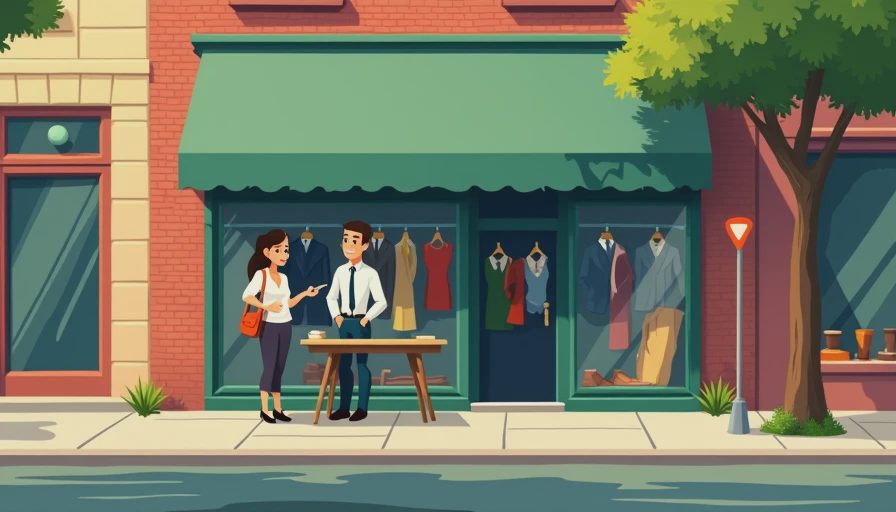
A suit tailor near me should also ask you to move. Raise your arms, sit down, cross one arm over your body, and turn from side to side. A jacket that looks perfect while you hold your breath is not finished. The back vent should not gape dramatically, and the sleeve should allow movement without dragging the entire jacket upward.
How to judge the tailor's work
Turn the jacket inside out. The inside tells the truth. Look for neat seam allowances, secure thread ends, and a lining that moves independently rather than pulling at the outer fabric. This does not mean every excellent jacket must be fully canvassed or handmade. A well-constructed fused jacket can serve you beautifully. It does mean the internal work should be orderly and appropriate to the price.
Ask how the tailor plans to make the adjustment. “I will take it in” is not a complete answer. Will the change come from the side seams, center back, darts, or a combination? Can the original stitching be removed without damaging the cloth? Is there enough seam allowance to let the garment out later?
A skilled suit tailor near me should explain these choices in plain language. For example, taking in a jacket through the side seams can improve the waist but may alter the position of the pockets. Moving a shoulder is a larger operation because the sleeve and armhole must be removed and reset. Shortening sleeves is usually straightforward, unless the buttons are functioning buttonholes that need to be rebuilt.
Common suit alterations and realistic prices
Prices depend on the fabric, lining, construction, and local labor, but ordinary alterations often fall into familiar ranges. Trouser hemming commonly costs about $15 to $35. Adjusting a trouser waist may run $25 to $60, especially if the waistband, belt loops, or seat must be opened.
Jacket sleeve shortening often lands around $35 to $75 when done from the cuff. Shortening from the shoulder costs more because the sleeve cap and armhole are involved. Taking in a jacket can range from $45 to $120. Reshaping a shoulder, collar, or complex lining can move beyond $150.
If a suit cost $250, spending another $75 to improve the fit can be sensible. If the shoulders are fundamentally wrong, however, alterations can become an expensive attempt to rescue a bad starting point. A suit tailor near me can diagnose that before you spend money, so ask for an honest assessment rather than assuming every garment is fixable.
Choosing fabric before choosing a tailor
Fabric changes what a tailor can do. Wool with a little natural give usually responds well to shaping and pressing. Linen can be beautifully forgiving in movement but will crease; that is a property, not a manufacturing defect. Polyester-heavy cloth may hold a sharp crease, but it can resist pressing and show shine if handled carelessly.
Inspect the fabric under ordinary light. Does it spring back after you pinch it gently? Does the pattern match across the front, pocket, and side seams? Are the trousers lined to the knee, or does the lining stop awkwardly above it? A higher price does not guarantee quality, but these details tell you more than the label.
A suit tailor near me should know how the cloth behaves before recommending a major alteration. Removing an inch from a trouser hem is one thing. Recutting a jacket front or changing the position of a pocket is another. The best answer may be to exchange the suit for a better base size.
Questions to ask at the first appointment
Bring a short list so nerves do not take over. Ask whether the tailor has worked with women's jackets and trousers, whether fittings are included, and how many visits the job usually requires. Ask when you will approve the pinned changes and whether the tailor guarantees the work for a reasonable correction period.
Notice whether the tailor pins carefully and marks both sides separately. Most bodies are not symmetrical. One shoulder may sit lower, one hip may be fuller, or one sleeve may need a quarter-inch difference. Treating both sides identically is efficient, but it is not always accurate.
You should also ask what to do if the garment feels wrong after sewing. A reputable suit tailor near me will want to hear about a genuine fit issue and will explain whether it can be corrected. The fitting room is not a courtroom. Speak up while the pins are still in place.
Getting a polished result without overspending
Start with the best-fitting jacket you can find through the shoulders and bust. Those areas are the skeleton of the garment. Waist suppression, sleeve length, trouser hems, and small seat adjustments are usually more manageable. Buying a larger jacket and removing several inches everywhere can distort the armholes and pockets.
Schedule the fitting at least two weeks before an interview, wedding, conference, or other important event. A tailor may need to order supplies, press the garment more than once, or schedule a second fitting. Do not bring a suit on the morning of the event and expect a miracle. Even my vintage Singer would object to that timetable.
When comparing a suit tailor near me, judge communication as carefully as stitching. Clear measurements, a written estimate, and a specific pickup date are reassuring. So is a tailor who tells you when the garment is not worth altering. Book a consultation, bring the shoes you will wear, and let an experienced eye show you what the seams are saying.


No notes yet — write the first one.