I have spent twelve years turning wedding dresses inside out, and the question I hear at every fitting is the same: where do I even start if I want to learn how to sew? You don't need a class or a fancy machine. You need a needle, thread, an old garment you don't mind ruining, and a willingness to read the inside of your clothes. The inside tells the truth.
Start With a Garment Autopsy
Before you thread a needle, pick any shirt from your closet and turn it inside out. Look at the seams. Are the edges serged, tucked into a French seam, or left raw? You are not shopping; you are learning construction. Notice how the sleeve is set into the shoulder, how a dart curves over fabric, and why the hem is folded twice. Every garment is a lesson if you slow down.
The best way to learn how to sew is to reverse-engineer clothes you already own. A simple tee has a shoulder seam, side seams, a sleeve cap, and a hem. Trace each one with your finger. The inside tells you exactly how the piece was built.
The Only Tools You Need to Begin
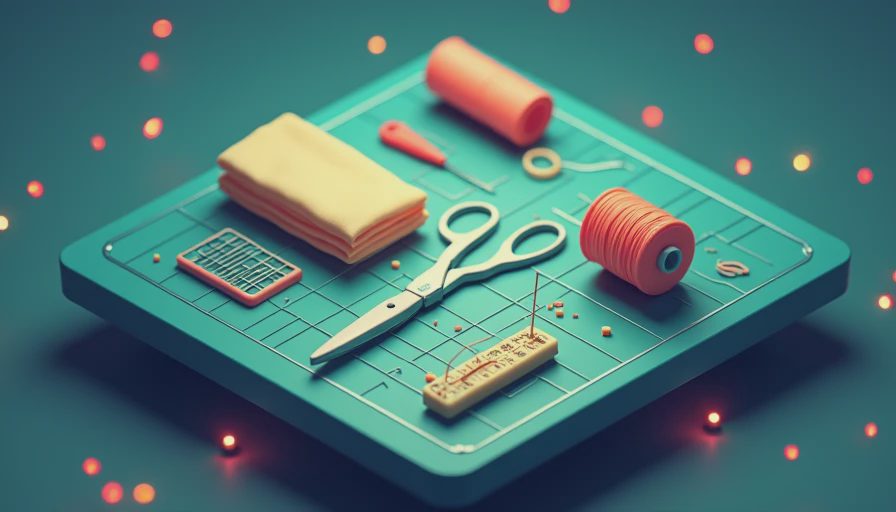
You do not need a $1,200 machine. I learned on a 1970s Singer from a yard sale, and it still sews a better stitch than many new ones. For your first week, gather five things: a hand-sewing needle, all-purpose thread, sharp fabric scissors, a seam ripper, and a tape measure. That is enough to learn on.
The hard part is not the tools. It is giving yourself permission to make ugly seams. Do that, and you are already sewing.
How to Sew a Straight Seam (Properly)
A straight seam is the foundation of every garment. On a machine, line up the fabric edges, set stitch length to 2.5, and guide the fabric along the presser foot. By hand, use a running stitch in a straight line with even tension.
Start with a cotton scrap. Draw a line, then sew along it. Do not tug the fabric; let the machine feed it. On a hand needle, keep your stitches small and even, then press the seam flat. Practice until it lies smooth. The fastest way to get comfortable with how to sew is to sew the same seam twenty times. I have sewn thousands, and that repetition is why anyone trusts me with a wedding dress.
When to Take a Garment Apart
Once you can sew a straight seam, learn to take seams out. A seam ripper slides under a stitch and cuts it. Open a seam and you see the seam allowance and the original thread. This is exactly what I do when a bride needs more room in the hips. I unpick the side seam, let out the allowance, and sew it again. Taking a garment apart is diagnosis, not destruction.
Now that you know how to sew a straight seam, the next step is to shorten a hem on real clothing. Pick a pair of pants or a skirt you never wear because of the length. The worst case is it stays unwearable. The best case is you understand how store-bought hems are built.

A Simple First Project: Shorten a Hem
Turn the pants inside out and open the existing hem with your seam ripper. Press the fabric flat, decide how much length to remove, and mark the new fold with chalk. Fold the fabric up, press sharply, and pin it.
If you are hand-sewing, use a slip stitch so the thread barely shows outside. If you are machine-sewing, a straight stitch near the fold works for casual pants. Hang the pants before pinning; fabric settles, and a crooked hem is almost always a measuring mistake. The real cause of a bad hem is rushing. Pin everything, check it twice, then sew once.
What People Get Wrong About Learning to Sew
The biggest mistake is buying expensive fabric to practice on. If you need to learn how to sew, practice on bedsheets, old curtains, and stained shirts. Good fabric does not forgive bad seams; cheap cotton does.
The second mistake is skipping the iron. Press every seam open after you sew it. That habit alone will make your work look store-bought.
The third mistake is treating sewing as talent. It is a craft. If you can operate a toaster, you can learn how to sew. It just will not happen in one afternoon. It happens in the twenty minutes you spend taking in a waistband or patching a knee.
Make It a Habit, Not a Hobby
Whether you want to learn how to sew to fix clothes or make a dress someday, the path is the same. Start small. Keep a drawer with your needle, thread, scissors, and seam ripper. Leave an unhemmed pair of pants near your machine. Sit down for ten minutes when you pass them. One seam at a time.
If you want company, bring in a garment that does not fit and study it. Turn it inside out and trace the seams. Ask yourself what the inside tells you. That is where sewing actually starts.



No notes yet — write the first one.