For twelve years I spent my days turning wedding gowns inside out. Now I run a styling studio in Richmond, Virginia, and I still tell every client the same thing: the inside tells the truth. The best way to learn what that means is to sew. Beginner sewing projects aren't just about making something cute; they're about understanding why a seam sits where it does, why a dart changes the way a bodice fits, and why a $300 blouse can feel worse than a $40 one from a thrift store. You cannot get that kind of knowledge by scrolling product pages. You have to feel it under your hands.
When you make something yourself, you start to see the decisions that go into every garment you own. So here are the beginner sewing projects I recommend to every woman who wants to understand her wardrobe from the inside out.
Why Sewing Is the Fastest Way to Learn Fit
Fit is not magic. It's math and geometry, made from seams, darts, and grain lines. When you sew a straight seam, you feel how the fabric pulls. When you baste a dart and try the garment on, you see how a small fold can take a flat piece of cotton and make it curve around a body. That physical experience is something no YouTube haul can teach.
I have altered over 12,000 garments, and the women who understand fit best are almost always the ones who have sewn something. They can look at a shoulder seam and know whether it will sit properly. These are skills you can build at a sewing machine in one afternoon.
What to Buy Before You Start (Without Breaking the Bank)
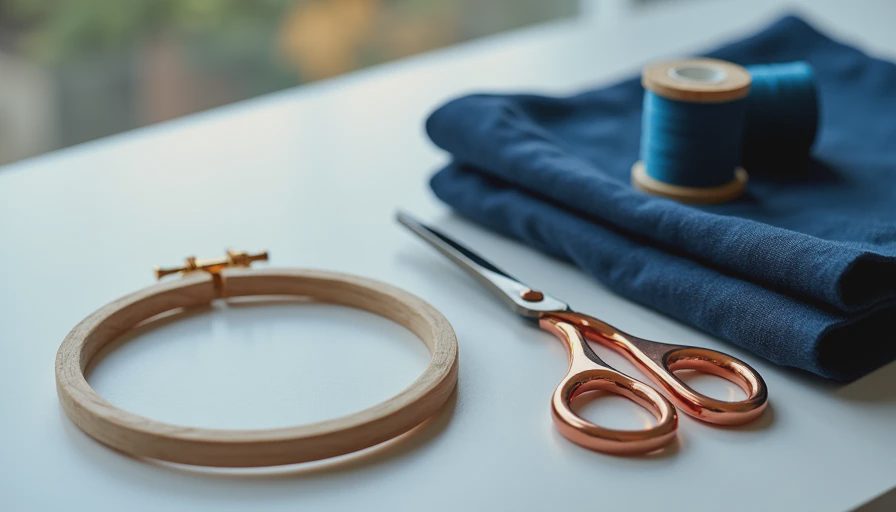
You don't need a $1,500 machine. A basic mechanical machine from Janome or Brother will do, and a used one from a dealer costs $100 to $250. Fabric shears, pins, a seam ripper, and a tape measure run maybe $30 total. For your first few beginner sewing projects, buy plain cotton or cotton-linen blend at $8 to $12 per yard. Skip the polyester that slides around and the expensive designer cottons until you know what you're doing.
Thread is another place to save: a basic all-purpose polyester thread from Coats & Clark or Gutermann is perfect. You'll also want a good iron with steam; pressing is half of sewing and the step most beginners skip.
Project One: Drawstring Pajama Pants
Start with a pair of drawstring pants. You'll need about two yards of cotton flannel or lightweight woven fabric, plus cord or ribbon. This project teaches you to sew a straight seam, insert a casing, and finish a hem — three skills that transfer to everything. You don't need a pattern; just trace a pair of wide-leg pajamas you already own, adding an inch for seam allowance.
The first pair will take you an afternoon. The second pair will take half that. When you wear them, you will know exactly how the waistband was made. That's the inside telling the truth.
Project Two: A Lined Zipper Pouch
A zipper pouch is small enough to finish in one sitting. It teaches three things: cutting accurately, installing a zipper, and understitching the lining. Use a cotton canvas outside and a quilting cotton lining, roughly $10 in total materials. This is the project where most beginners learn to slow down. Zippers scare people, but they're just a seam with a stop.
Make one to hold your skincare bottles when you travel. Then make another as a gift. The repeat is what builds skill.
Project Three: A Tote Bag with a Lining
A lined tote is the perfect next step after pajama pants and pouches. It has handles, a lining, and a seam at the top where the two fabrics meet. It teaches you to think in layers. Every time you turn the bag right-side out, you're practicing the same step you use in a lined blazer or a coat.
Use a medium-weight denim or canvas for the outside and a cotton print for the lining. Total cost is around $15 to $20. Once you've made a lined tote, you can read the inside of any handbag and understand why it's puckering or collapsing.
Project Four: A Pillowcase with French Seams
This is the project that makes you feel like a real sewist. A French seam encloses the raw edge inside another seam, so the inside of your pillowcase looks as clean as the outside. You need one yard of fabric, and you'll practice folding, pressing, and precision. This is the same finishing technique used in high-end garment construction. It gives you the vocabulary to look at a well-made dress and say, "Ah, they used French seams."
Plus, a hand-made pillowcase is a genuinely nice thing to own. Nobody is going to make that argument for a tote bag full of zucchini bread.
What These Beginner Sewing Projects Teach You
When you complete these beginner sewing projects, you'll have a small wardrobe of useful items and a new set of eyes. You'll be able to tell when a garment is sewn with a lockstitch that will hold up or a cheap chain stitch that will run. You'll know why a hem should be pressed before it's stitched. You'll see the difference between a fabric that was cut on the grain and one that was cut crooked on the bolt.
And you'll start saving money. Simple repairs like hemming pants cost $10 to $20 at a tailor. A button replacement runs $5 to $10. When you can do those yourself, you'll save a few hundred dollars a year. More importantly, you'll stop replacing clothes that could be fixed.
The next time you're in a dressing room, turn the garment inside out. Look at the seams. See if the line is straight and the threads are tight. The inside tells the truth — and now you have the skills to read it.

No notes yet — write the first one.