When you're learning to sew, easy sewing projects are the best teacher. Twelve years at the alterations table taught me that a beginner who sews a straight seam well understands more about clothes than someone who buys expensive labels. The inside tells the truth. So let's talk about the easy sewing projects that actually build real skills. No corsets, no couture. Just honest fabric, a needle, and a willingness to learn.
Why Easy Sewing Projects Are the Best Way to Learn
The problem with starting on a fitted dress is that you're fighting three skills at once: curved seams, set-in sleeves, and waistband shaping. Easy sewing projects let you isolate one skill at a time. A tote bag teaches you to sew a straight line and press a seam. A pillowcase teaches you to turn corners. When I teach clients in my studio, we always begin with a project that has four flat sides and no fitting. That builds confidence fast. And confidence is what keeps people sewing past the first week.
The Tote Bag: Your First Real Seam
A canvas tote bag is the easiest thing you can make that you will actually use. You need one piece of fabric folded in half, two straight seams, and a hem at the top. Add webbing straps and you are done. When you sew that bottom corner, take a moment to look at the inside. Are your stitches even? Does the fabric pucker? That feedback is worth more than any tutorial.
For fabric, choose a midweight cotton canvas or a sturdy linen. Avoid heavy upholstery material at first; it will fight your machine and wear out your needle. And press every seam as you go. A pressed seam is half the difference between handmade and homemade. I've seen otherwise lovely totes ruined by wavy seams that a hot iron could have fixed in ten seconds.

The Pillowcase Trick for Pressing and Corners
Pillowcases are another one of my favorite easy sewing projects because they force you to manage a corner in a small space. You can make one from a single yard of quilting cotton. Fold it right sides together, sew three sides, and then turn it. The catch is that you have to clip the corners diagonally before turning, or you'll get bulky lumps. I have unpicked more lumpy pillowcase corners than I can count.
Press the corners with a point turner or the tip of a pair of scissors, and the inside will look as crisp as the outside. This project also sets you up for a French seam later, which hides all raw edges and looks beautiful inside. Start with plain seams first. Once you've made two or three pillowcases, you'll be ready.
The Elastic-Waist Skirt That Actually Fits
An elastic-waist skirt is a true easy sewing project that teaches you about gathering and ease. You cut a rectangle at hip width plus ease, sew a side seam, and thread elastic through a casing. There is no zipper and no button. Here's the inside trick: leave a gap in the casing seam so you can thread the elastic. I've seen beginners sew the casing shut and then wonder why the elastic won't move.
Always try the skirt on before you close the gap. The amount of ease you need depends on your fabric: a stiff cotton needs more wiggle room than a drapey rayon. Write your own numbers in that notebook. You'll use them every time you sew a skirt or a pair of pants.
Tools That Make Easy Sewing Projects Even Easier
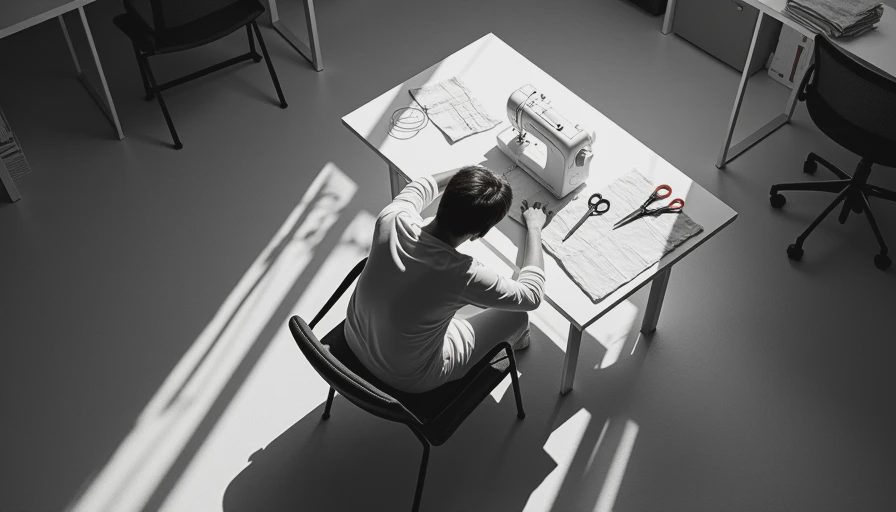
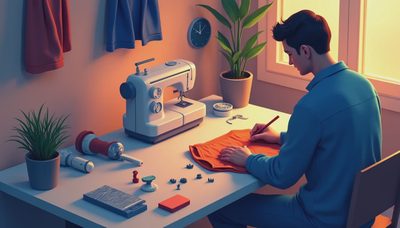
You don't need a fancy machine for these projects. A basic straight-stitch model is enough, even a vintage 1960s Singer from a flea market. Easy sewing projects feel better with good pins, a sharp seam ripper, and an iron that steams. Honestly, the iron is the most underrated tool. Keep a dedicated pair of fabric shears, and use them only on fabric. Cutting paper dulls the blades, and dull blades crush the fabric instead of slicing it.
What to Skip When You Are Starting Out
Now the other side. Those are not easy sewing projects if they involve princess seams, boning, or a silk charmeuse lining. Skip slippery fabrics, stretchy knits, and patterns with five pattern pieces. Skip invisible zippers until you've installed a regular one. And skip any pattern labeled easy if it has set-in sleeves or a fabric requirement of more than two yards.
A true easy sewing project has three or fewer pattern pieces, straight grain lines, and no special notions. The goal is to finish something, wear it, and learn from it. That is what builds the ability to take on harder things later.
The End Goal: Sewing for Your Own Wardrobe
Easy sewing projects are not just crafts. They are a way to read what's inside the clothes you already own. When you've sewn a flat fell seam yourself, you'll recognize it in a pair of jeans. Once you can read the inside, you'll stop overpaying for mediocre construction. The inside tells the truth, and now you'll know how to look for it.
So pick a tote pattern, a pillowcase, or a simple skirt. Give yourself permission to make crooked seams. Easy sewing projects are not about perfection; they are about learning to see. Every seam you sew teaches you something, even the ones you unpick. That is the real payoff, and it never goes out of style.

No notes yet — write the first one.