When you search for clothing alterations near me, you are not really looking for someone who can operate a sewing machine. You are looking for a person who understands why a jacket pulls across your back, why a skirt twists when you walk, or why one shoulder always seems lower than the other. After twelve years and more than 12,000 garments at an alterations table, I have learned that the right adjustment can make an ordinary garment look intentional. The wrong one can make an expensive piece look lopsided.
The first thing I tell clients is to bring the garment, the shoes you expect to wear with it, and the undergarments that affect its shape. A tailor cannot assess a dress accurately if you arrive in flat sandals and plan to wear three-inch heels. Clothing sits on a body, not on a hanger, and the details around that body matter.
What a Good Alterations Appointment Looks Like
A useful appointment begins with questions, not pins. The professional should ask how you plan to wear the garment, whether you need to move comfortably, and what bothers you when you look in the mirror. She should examine the fabric, lining, seam allowance, closures, and grain before promising a price.
When comparing clothing alterations near me, pay attention to whether the person watches you walk, sit, lift your arms, and turn sideways. A hem that looks perfect while you stand still can be visibly uneven once you take a step. A sleeve can appear too long when your arms hang naturally but become correct when you bend your elbow.
I also expect an honest explanation when a garment cannot be improved much. A blouse with no extra fabric at the side seams cannot be made dramatically larger. A jacket with a narrow shoulder structure cannot always be reshaped without disturbing the sleeve cap. The inside tells the truth: turn the garment inside out and look for seam allowance, secure stitching, and a lining that is not fighting the outer fabric.
The Most Useful Everyday Alterations
Hemming trousers, jeans, skirts, and dresses is the most common request, but “shorten it” is not a complete instruction. The correct length depends on the garment, shoe, break, and fabric weight. Wide-leg trousers often need a clean skim above the floor, while slim ankle pants may finish several inches higher. Denim may require preserving the original hem, especially if its faded edge is part of the design.
Waist adjustments are another frequent fix. If pants gap at the back but fit through the hips, removing fabric from the center back is often cleaner than sizing down the entire garment. If a skirt spins around your waist, the issue may be uneven tension rather than a simple measurement problem. Dresses sometimes need darts adjusted so the bust area lies smoothly without pulling at the zipper.
Sleeve shortening, strap adjustment, and taking in side seams can transform a dress or blouse. However, taking in a garment is usually easier than letting it out. Before paying for clothing alterations near me, pinch the fabric inside the garment and ask how much usable seam allowance remains.
How Much Should Clothing Alterations Cost?
Prices vary by region and construction, but common alterations often fall into understandable ranges. A basic pant hem may cost about $15 to $30. A lined skirt or dress hem can run $35 to $75, while a jacket sleeve adjustment often costs $35 to $80. Taking in a dress, reshaping a waist, or altering a lined jacket may reach $75 to $200 or more because the lining, closures, and original seams must be opened and rebuilt.
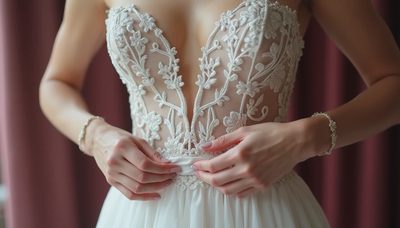
Bridal work costs more because gowns contain layers, boning, lace, beadwork, horsehair braid, and delicate finishes. A simple bridal hem might begin around $150, while extensive bodice changes can reach several hundred dollars. That is not a fee for “just sewing.” It is careful deconstruction and reconstruction, often performed on fabric that cannot be replaced easily.
Ask whether the quote includes pressing, replacing buttons, restitching the lining, and a final fitting. A low initial price is not useful if the finished garment still needs correction. When you compare clothing alterations near me, compare the explanation as well as the number.
Signs a Garment Is Worth Altering
Start with the fabric and structure. A well-made wool blazer with a good lining, functional buttonholes, and generous seam allowance can be worth altering even if it cost $100 at a resale shop. A flimsy fast-fashion dress with twisted seams and fabric that has already pilled may not deserve another dollar.
Look at the grain lines. Vertical seams should generally hang vertically, and patterns should meet reasonably at side seams. Check the care label too. Linen, silk, wool, rayon, and stretch synthetics respond differently to pressing and stitching. A tailor who handles bridal satin may approach a cotton shirt differently, and someone experienced with leather or knitwear has specialized equipment and methods.
A garment is a strong alteration candidate when the shoulders fit, the fabric feels good, and the problem is concentrated in one or two areas. Shoulder width is difficult and expensive to change. A too-long hem, loose waist, or excess fabric at the side seam is usually more straightforward.
Questions to Ask Before Leaving the Garment
Ask what will be changed, where the original stitching will be removed, and whether the finished result will preserve the garment’s balance. If a hem is raised several inches, the tailor should consider pockets, vents, decorative borders, and the placement of a print. If a jacket is taken in, ask whether the lapels and button position will still look centered.
You should also ask about turnaround time and fittings. A basic hem may be ready in a few days, while a complicated dress can require two or three appointments. Do not schedule a major alteration the day before an event. Even excellent work needs time for pressing, inspection, and a correction if the fabric behaves differently than expected.
A professional may mark the garment with pins, chalk, or temporary thread while you wear it. Stand naturally during this process. Do not pull your shoulders back or hold your stomach in; that creates a measurement for a body position you will not maintain through dinner, commuting, or dancing.
Making Clothing Alterations Near Me Part of a Smarter Wardrobe
The best alterations are not about forcing every purchase to work. They are about recognizing which garments have sound bones and deserve a better finish. I have seen a $40 dress become a dependable work piece after a modest hem and strap adjustment, while a costly blouse went back to the closet because its armholes were cut incorrectly and could not be fixed without rebuilding the bodice.
Before shopping, know your recurring measurements: natural waist, fullest hip, shoulder width, inseam, and preferred sleeve length. Then buy for the largest area that must fit, usually the shoulders, bust, or hips, and alter the smaller areas afterward. This approach gives a tailor fabric to work with instead of asking her to perform miracles with a seam allowance the width of a pencil.
When searching clothing alterations near me, read reviews for comments about communication, fit, finishing, and difficult fabrics rather than only speed. Bring one garment that fits you well as a reference if the professional requests it. And always try on the completed piece before taking it home. Look at the front, back, and side; sit down; raise your arms; and check that the lining moves with you.
Clothes do not need to be expensive to look polished. They need to hang where they were designed to hang, with seams that respect your movement and fabric that falls instead of fighting you. Find a skilled alterations professional, ask sensible questions, and let the inside tell the truth before you commit.

No notes yet — write the first one.