When I turn a garment inside out, I can tell within seconds who made it and how much they cared. The machine stitching on a fast-fashion blouse is usually the same straight zigzag that shows up in every seam. But hand sewing stitches are different. Hand sewing stitches are what you find on a $500 dress that fits like it was poured over you, and they are also what you can learn to do yourself on a Tuesday night with a needle and thread.
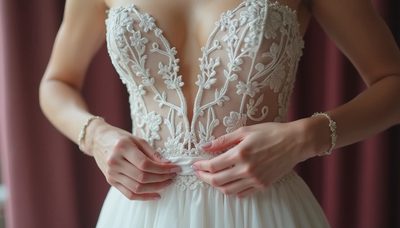
I spent over a decade doing bridal alterations, and every single gown that left my table had at least a few hand stitches in it. Machines are fast, but they are not always right. Some seams need to move with you. Some edges need to lie flat without showing a stitch. Hand sewing gives you that control.
Hand stitching is also how you repair a damaged piece without making it worse. A torn seam on a tailored coat should be closed with a backstitch, not a quick whiz through the machine. The machine stitch may hold, but it won't match the original tension and it may pucker the wool. Hand sewing lets you match the fabric's behavior.
Why Hand Sewing Stitches Matter More Than You Think
Most people think hand sewing is just for quilting bees and grandmothers. In reality, hand stitches are the difference between a garment that survives a season and one that survives a decade. The most expensive dresses I unpicked were held together with fine, even hand stitches. The cheap ones relied on overlocked edges and glue-dotted hems. The inside tells the truth.
The Hand Sewing Stitches You Will Actually Use: Running Stitch and Backstitch
The running stitch is the simplest hand sewing stitch to learn. You simply weave the needle in and out of the fabric at a consistent length. I use it for gathering a sleeve, basting a lining into place, or mending a pillow cover. It is not a stitch for high-stress areas; the thread can snap if you pull too hard.
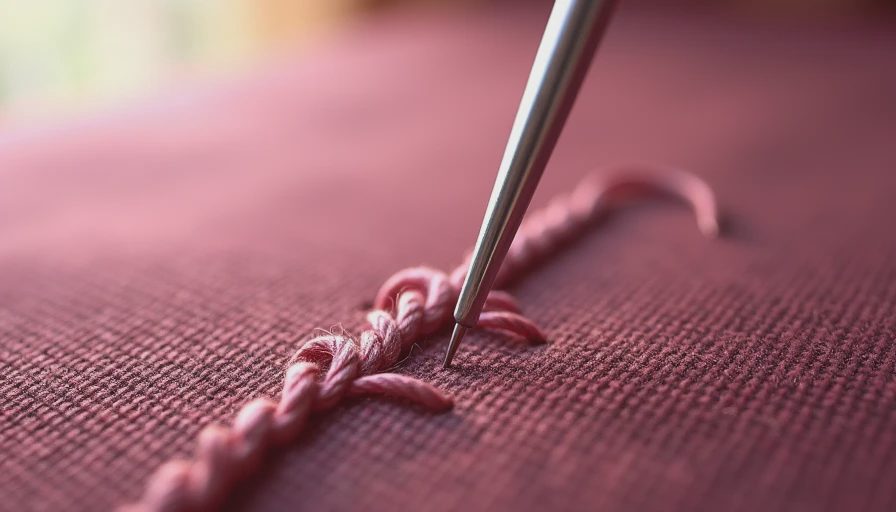
For anything that needs to hold, you reach for the backstitch. A backstitch is a running stitch that reverses direction with every pass, which means it locks itself into the fabric like a line of machine stitching. When I shorten a pair of trousers, I always use a backstitch to restitch the split seam of a waistband because it can handle the pull. It is the workhorse of hand sewing stitches, and the one I trust for repairs.
The Slip Stitch and the Whip Stitch: Finishing Like a Pro
The slip stitch, sometimes called the blind hem, is how you hem a skirt without any stitch showing on the outside. You pick up just a few threads from the fabric, then run the needle under the folded hem, then pick up a few more threads. The result is a hidden connection that moves with the fabric. Every formal dress I have hemmed gets a slip stitch. It takes practice, but the payoff is a hem that looks invisible.
The whip stitch is faster and more visible. You wrap the thread over the edge of the fabric in a diagonal pattern. It is perfect for attaching a patch or closing a seam in a children's costume. When I was altering twelve bridesmaids dresses in one week, the whip stitch was my friend. It is not subtle, but it is strong and easy to remove if you make a mistake.
How to Choose the Right Hand Sewing Stitch for Your Fabric
The rule of thumb is simple: the more stress a seam gets, the more locked the stitch should be. For a seam that moves and pulls, like a crotch seam or an underarm, use a backstitch or a catch stitch. For a seam that just needs to stay out of the way, like a hem or a facing, use a slip stitch. For a repair that will never see stress, like a decorative patch, a whip stitch is fine.
You also need to match the thread to the fabric. A cotton thread on a delicate silk can cut the fibers. A polyester thread is stronger but can stretch with synthetic fabrics. When I sew with silk, I use a fine silk thread and a needle that doesn't leave a hole. If you are new to hand sewing, buy a mixed pack of needles and a few colors of thread, and practice on a folded piece of cotton.
A Snapshot of a Hand Sewing Kit
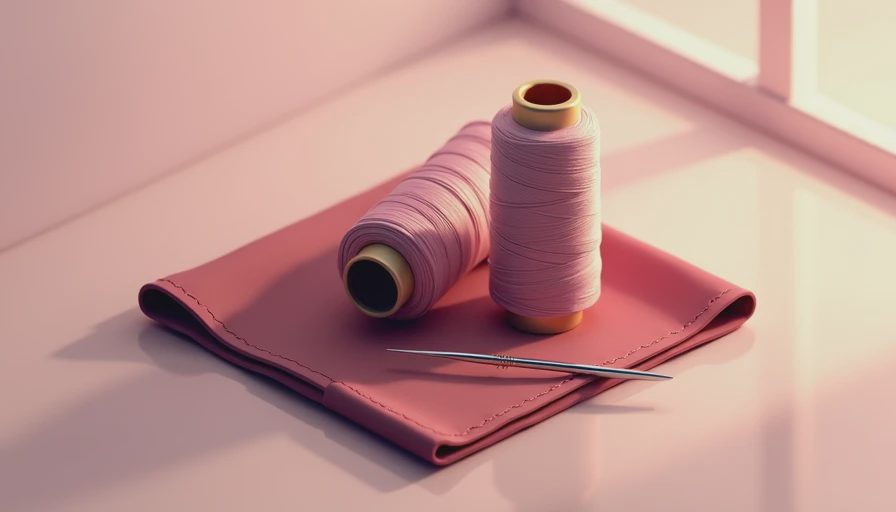
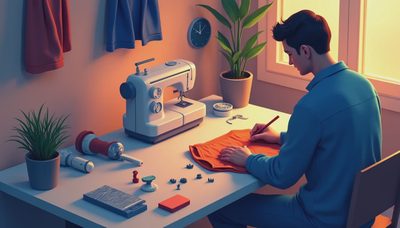
Here is what I keep in my own kit. A thimble with a leather patch, because your finger takes the abuse. A pair of sharp embroidery scissors. Beeswax for conditioning the thread, so it doesn't tangle. And at least three types of needles: sharps for general sewing, milliners for basting, and a curved needle for tight spots like upholstery or a seam near a zipper. The total cost for a solid starter kit is under twenty dollars. That is less than a single trip to the tailor, and it will last you years.
The Inside Tells the Truth
Next time you buy a blazer, check the sleeve lining. If you see a neat row of hand slip stitches where the lining meets the hem, that is a sign of quality. If you see only machine stitching and raw edges, you are holding a garment that will fall apart faster than you would like. Hand sewing stitches might seem old-fashioned, but they are the most honest indicator of how well a piece of clothing was made. Hand sewing stitches are not a substitute for a proper fitting, but they will keep your clothes alive longer and save you a trip to the tailor for the simple stuff.


No notes yet — write the first one.