When I turn a garment inside out, I'm not looking for a brand label or a care tag. I'm looking at the sewing stitches. After twelve years of altering wedding gowns and everyday clothes in Richmond, I've learned that the inside tells the truth. A blouse can cost three hundred dollars and still fall apart at the shoulder seam, while a forty-dollar dress from a discount rack can survive a decade of washing. The difference almost always comes down to the stitches that hold the whole thing together.
The Straight Stitch: Your Everyday Workhorse
The straight stitch is the most common sewing stitches you'll ever see. It's a single line of thread, one stitch in front of the other, and it's used for most seams on woven fabrics. When you look at a shirt seam, you're probably seeing a straight stitch. What matters is the stitch length — the number of stitches per inch. On quality garments, you'll see eight to ten stitches per inch. On fast fashion pieces, I often count five or six. Fewer stitches means less work and a weaker seam. It also means the thread is doing more work per stitch, which makes it more likely to pop under strain. If you hold a seam open and see clear gaps between the thread loops, that's a sign the manufacturer saved time.
The Zigzag Stitch: Where Strength Meets Stretch
Zigzag stitches are exactly what they sound like — the thread travels in a back-and-forth motion instead of a straight line. This stitch is built for stretch. You'll find it on the edges of knit fabrics, at the ends of seams, and occasionally as a decorative topstitch. The zigzag allows the seam to stretch without breaking the thread. When a pair of leggings or an athletic top loses its shape at the seam, it's often because the zigzag was too narrow or the thread didn't match the fabric's stretch. A proper zigzag should flex with the fabric, not fight it. I've repaired activewear where the seam snapped simply because the manufacturer used a straight stitch on a fabric that needed to move.
The Overlock Stitch: What Fast Fashion Hides
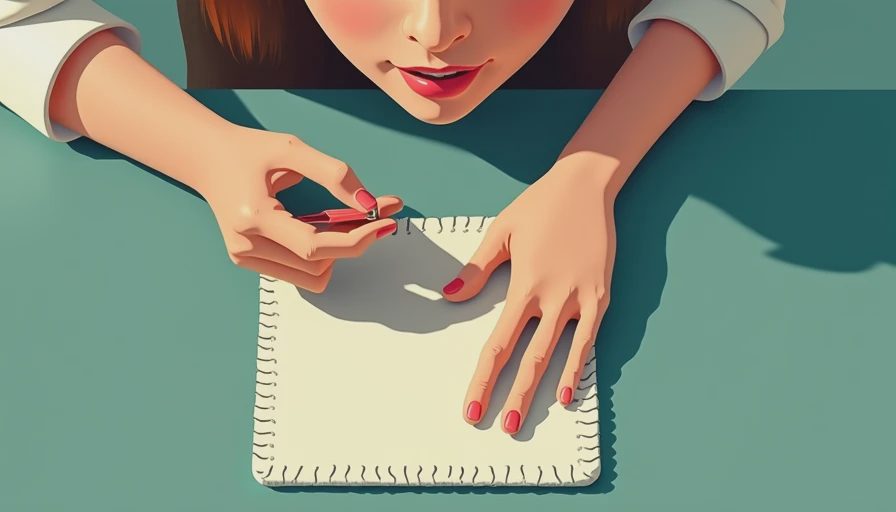
The overlock stitch, also called a serged seam, is the most common stitch inside mass-market clothes. It's the looped edge you see on inside seams of t-shirts, dresses, and blouses. The overlock wraps thread around the raw fabric edge to prevent fraying and bind layers. Done well, it's strong and durable. But it's also the easiest way to finish a seam quickly. On cheap garments, the overlock is loose and snags in the wash. I've seen brand-new dresses unravel after one cold cycle. Look at the loops: tight and short means careful calibration; loose and sloppy means a rushed job.
The Blind Hem: A Sign of a Careful Hand
One of the best sewing stitches in clothing is the blind hem, the nearly invisible stitch that finishes the bottom of skirts, trousers, and jackets. It's called blind because the thread barely shows on the outside — you see tiny little dots on the right side, but the bulk of the stitching hides inside the fold. A true blind hem takes time, which is why you rarely see it on budget clothing. Instead, you get a visible straight stitch or a topstitched folded edge. For a tailored wool trouser, a blind hem is a mark of craftsmanship. For a casual linen summer dress, a topstitched hem is perfectly fine and often more durable. The point is to notice what the maker chose to do.
The Coverstitch: The Stitch That Keeps Your T-Shirts Alive
If you turn a good quality t-shirt inside out, you'll see two parallel rows of stitching along the bottom hem and sleeves. That's the coverstitch, a specialized machine stitch that binds the hem while letting the knit fabric stretch. The coverstitch is one of the more advanced sewing stitches, and it's why a t-shirt hem snaps back into shape when you tug on it. Fast fashion t-shirts often substitute a simple zigzag or a single-needle stitch, which doesn't recover the same way. I tell clients to test a hem by gently stretching it. If the thread breaks or the fabric puckers, the stitch is wrong for the garment. A coverstitch moves with the fabric and returns to its original shape without stretching the stitches out of place.
How to Check Stitches in the Store: A 60-Second Test
You don't need to be a seamstress to spot quality stitching. Before you buy, turn the garment inside out in the store. Run your finger along the seam and tug gently. If the seam opens easily or the thread is loose, set it back. Look at the seams under the most stress: shoulders, crotch, underarm. These fail first. Check that the thread color matches the fabric; a mismatched thread often means a rushed job. Don't forget the hem. Stretch it slightly if it's knit. If the stitching stays flat and doesn't pull, that's a good sign. This test takes less than a minute and saves you from buying clothes that won't survive the third wash.
When to Walk Away vs. When to Buy and Fix
Not every perfect sewing stitch is necessary, and not every imperfect one is a dealbreaker. If a jacket has a slightly crooked topstitch but strong seams and good fabric, buy it. A tailor can fix the topstitch for a few dollars. But if the main seams are pulling apart or the overlock is unraveling before you own it, walk away. I've seen a $200 blouse with barely holding seams and a $20 thrift shop dress with impeccable construction. The inside never lies. Learn to read the stitches, and you'll stop wasting money on clothes that look fine on the hanger but fall apart after a season. That's a skill worth more than any designer label.


No notes yet — write the first one.